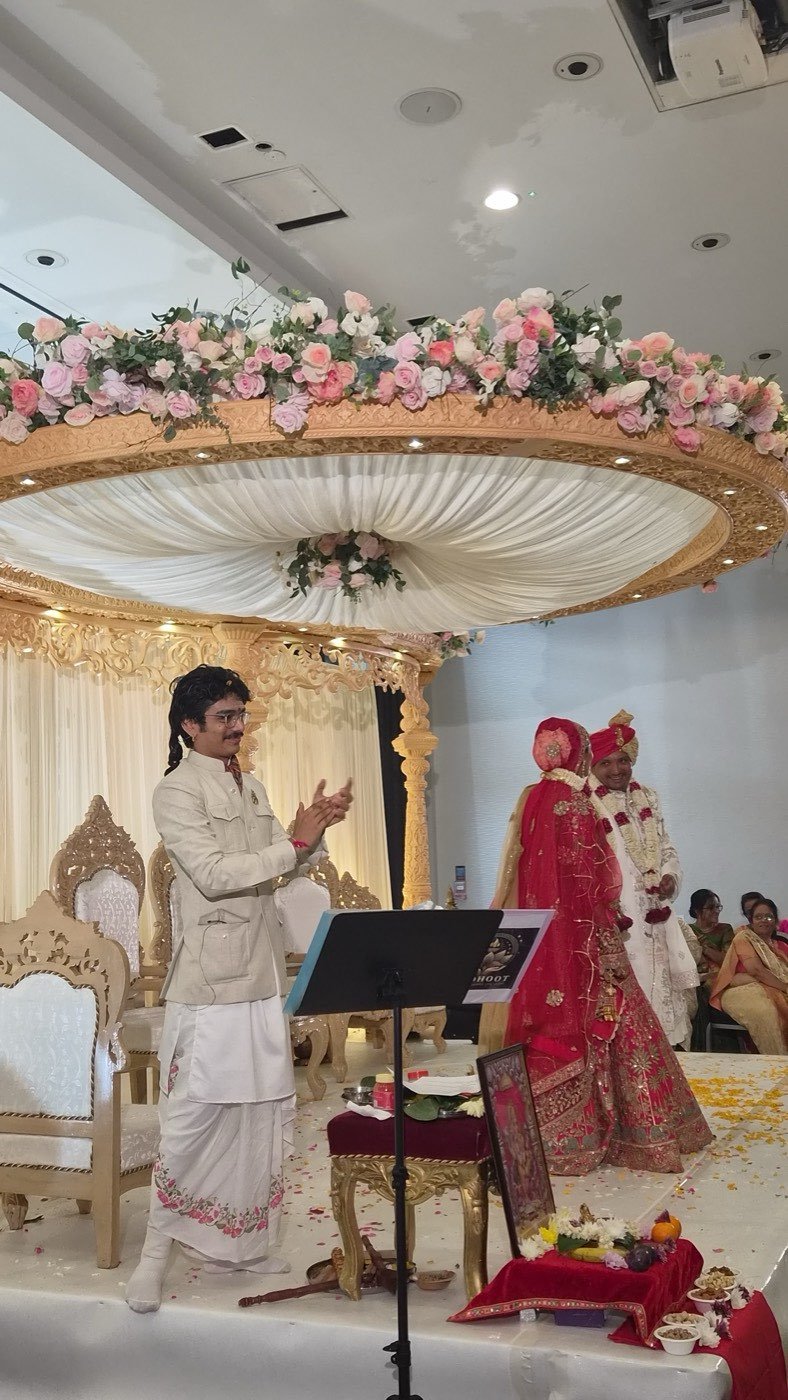
Many of the couples I meet grew up in the UK. They speak English at home with their friends, they know their parents' traditions, but they often tell me, "We want a traditional wedding. We just want to understand it."
That's exactly what I do. I keep the rites true to the Vedic way, and I explain every step so you feel it, not just watch it.
Why go traditional?
The Hindu wedding, Vivah Sanskar, is one of the sixteen sanskars. It has been performed in nearly the same way for thousands of years. When you take your vows in this form, you stand in a line that includes your parents, grandparents and generations before them. For many young people, that's what makes it feel real.
The heart of it: three things you can't skip
- Agni Sakshi (fire as witness): Fire is the witness. No paperwork, no audience, only truth and fire. The promises are made to the divine.
- Hasta Melap: The bride's parents entrust their daughter with love and trust, and the couple's hands are joined. In the traditional view, this is a sacred responsibility being shared, not a transaction.
- Saptapadi (seven steps): Each step is a vow: nourishment, strength, prosperity, happiness, family, health, and lifelong friendship. It is traditionally the step that completes the marriage.
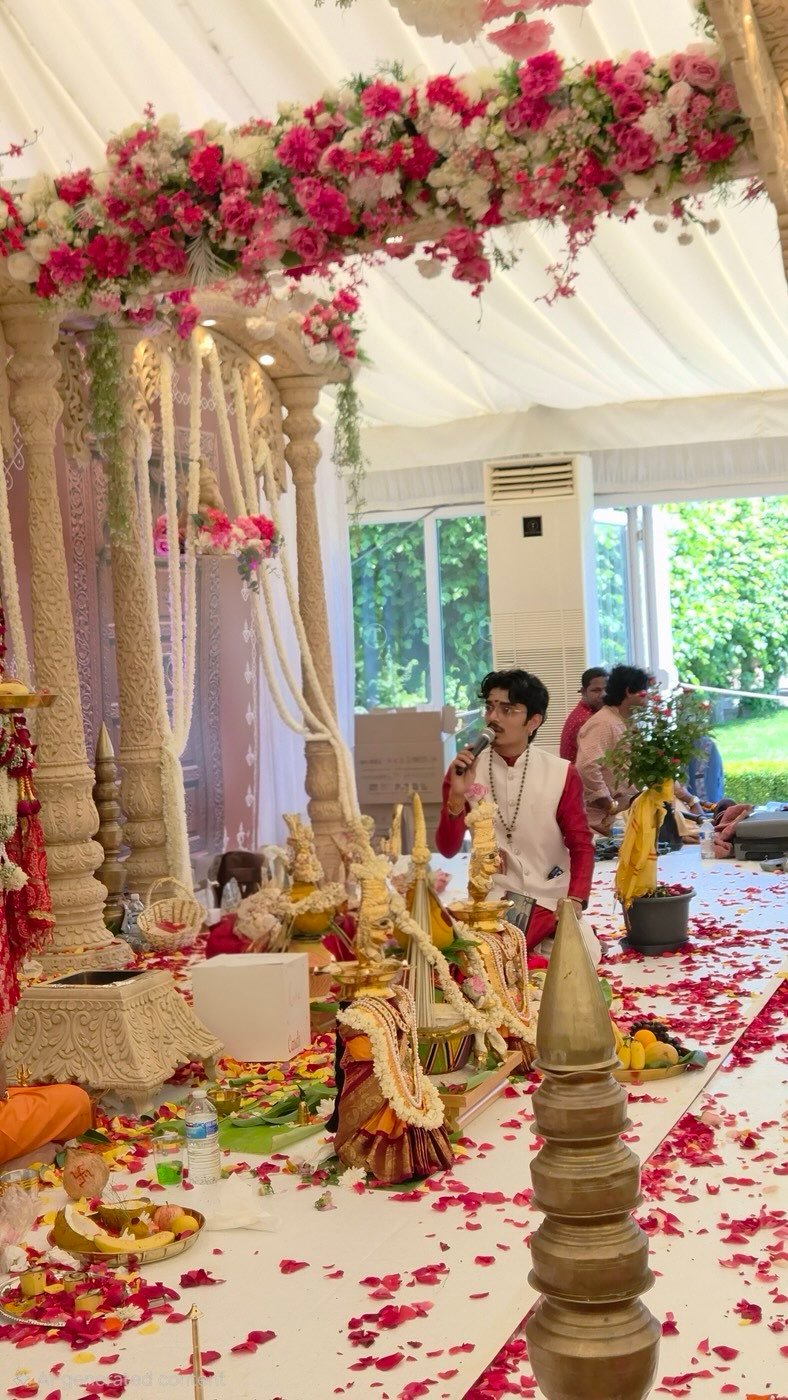
How I explain it to those who didn't grow up with Sanskrit
Mantras are in Sanskrit, because their sound and rhythm are part of the tradition. But I give the meaning in simple English before or during each rite, so you know what you are promising. A vow you understand is a vow you remember.
Traditional doesn't have to mean confusing or long
- I follow the order of rites faithfully, whether your family follows the Gujarati customs or another tradition.
- I tell you what's essential and what's custom, so you can make informed choices with your elders.
- I speak to parents and grandparents in Gujarati or Hindi, and to the couple and friends in English, so everyone is included.
Bringing two generations together
Often parents want everything done "the proper way," while the couple worry about time or guests not following. I sit with both sides before the day, so the ceremony honours the elders and speaks to the young.
Practical help for weddings in the UK
- Guidance on muhurat and preparing the samagri (items for the ceremony).
- Help with venue rules, especially the sacred fire, smoke alarms and ventilation.
- Clear information on the UK legal side, such as registering your marriage, so the day is both sacred and legally secure.
If you want a wedding that keeps the tradition alive and truly understands you, let's talk. Tell me your family's customs and your wishes, and I'll guide you.