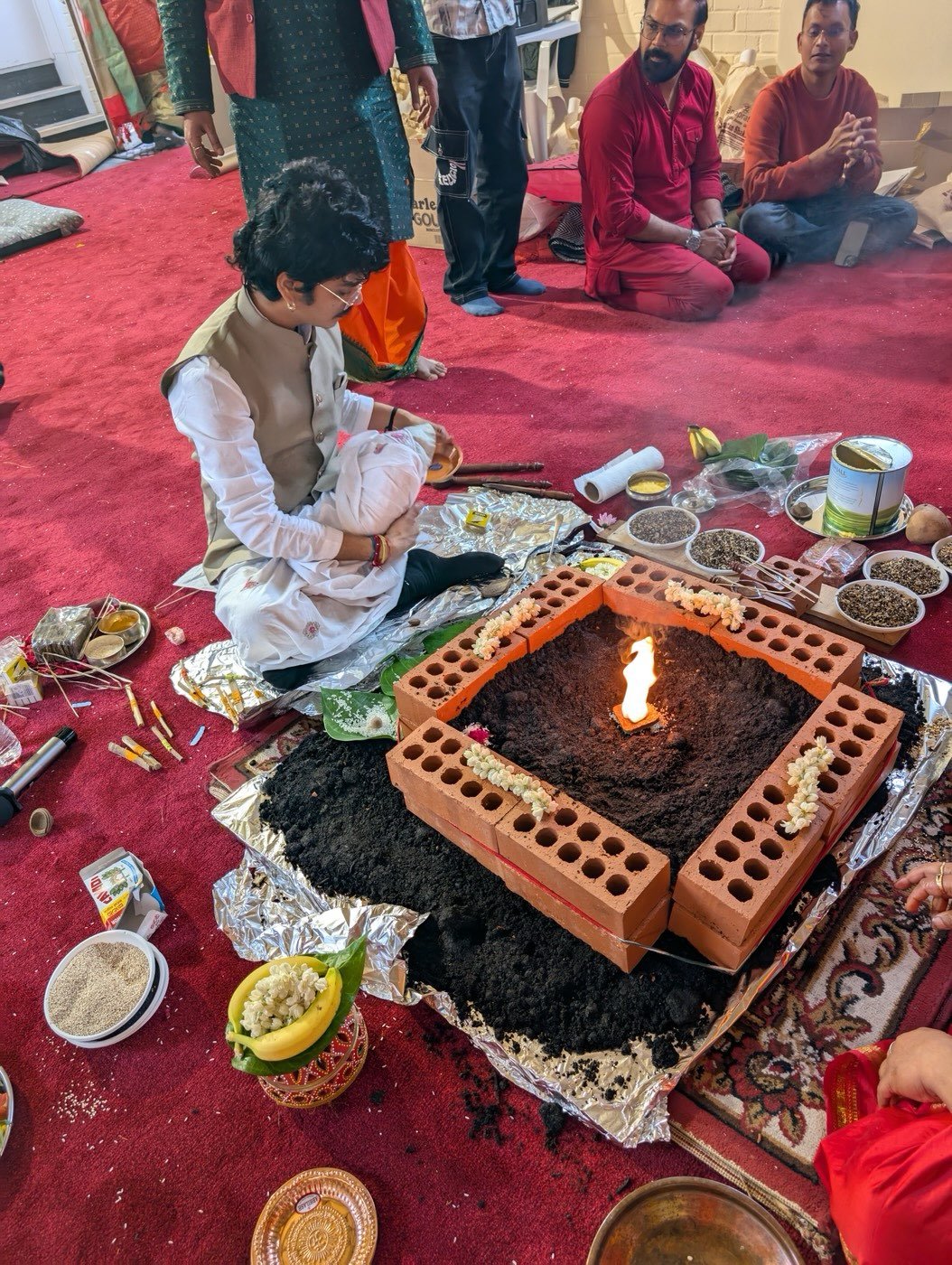
When I light the fire at a havan, I often see young people lean in with curiosity. Some quietly ask, "What does it all mean?" It's a great question, and the answer is beautiful.
What is Havan?
Havan (also called Yagna or Homa) is one of the oldest practices in Hindu dharma. The very first verse of the Rig Veda is a prayer to Agni, the sacred fire. In Vedic thought, Agni is the messenger. What we offer into the fire carries our gratitude, our wishes and our prayers upward.
What are we actually offering?
Ghee, herbs, grains, and wood from trees like mango. Each time an offering goes in, we say "Svaha". Then comes my favourite part: "Idam na mama," meaning "this is not mine."
Think about that for a moment. In a world that tells us to grab more, the havan teaches us to give, and to let go with a lighter heart. That's something many of us in busy British life need more than ever.
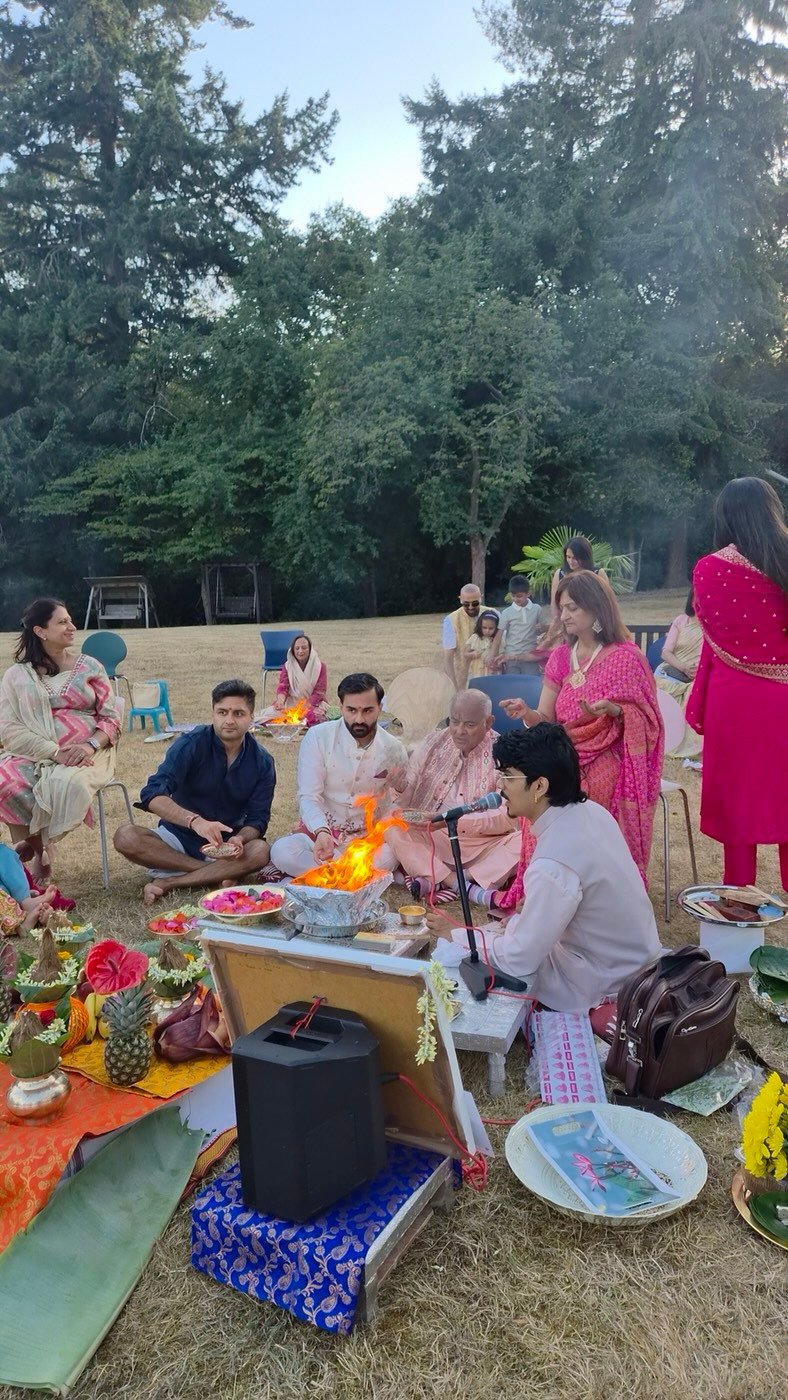
A family havan in a garden, led by Parth
The deeper meaning
Fire transforms everything it touches. In a havan, it reminds us that we can transform too: anger into patience, worry into trust, and habits that no longer serve us into something better. The sacred fire is outside us, but the change we ask for is inside us.
Why families love it
Everyone takes part. Each person offers the ahuti, from grandparents to children.
It marks fresh starts. New homes, new businesses, weddings, birthdays, or simply a time when you want a clean, calm beginning.
It slows us down. The sound of mantras, the warmth, the fragrance: it's a natural pause from screens and stress.
Plan a Havan with Parth
Tell Parth the date you have in mind and where it will be held. He will reply with availability, a muhurat, what you need to prepare and a price.
A havan, also called Yagna or Homa, is a sacred fire ritual and one of the oldest practices in Hindu dharma. In Vedic thought Agni, the sacred fire, is the messenger that carries offerings and prayers upward. The very first verse of the Rig Veda is a prayer to Agni.
What is offered into the havan fire?
Ghee, herbs, grains, and wood from trees like mango. Each time an offering goes in, everyone says "Svaha".
What does "Idam na mama" mean?
It means "this is not mine". It is said with the offerings, as a reminder to give and to let go with a lighter heart.
When do families hold a havan?
For new homes, new businesses, weddings and birthdays, or whenever a family wants a clean, calm new beginning.
Can children take part in a havan?
Yes. Everyone takes part. Each person offers the ahuti, from grandparents to children.
Does Pandit Parth Bhatt perform havan in London?
Yes. Parth leads havan at homes, halls and gardens across London, with each step explained in English, Hindi or Gujarati.